Three kinds of truth in one landscape
A photograph of a wooded shoreline can carry several kinds of statement. A historical statement might identify a building through an archive. A folklore statement might report a narrative recorded in a particular district. An interpretive statement might describe how the dark trees feel to the photographer. These can sit together, provided the reader can tell which is which.
The distinction matters because a compelling landscape makes invention unusually persuasive. Mist does not prove that a valley has a specific supernatural tradition. A suggestive rock does not establish a local name. Begin by describing what is visible, then add the source and scope of any story. If you cannot establish a local connection, discuss a wider tradition without relocating it to your chosen viewpoint.
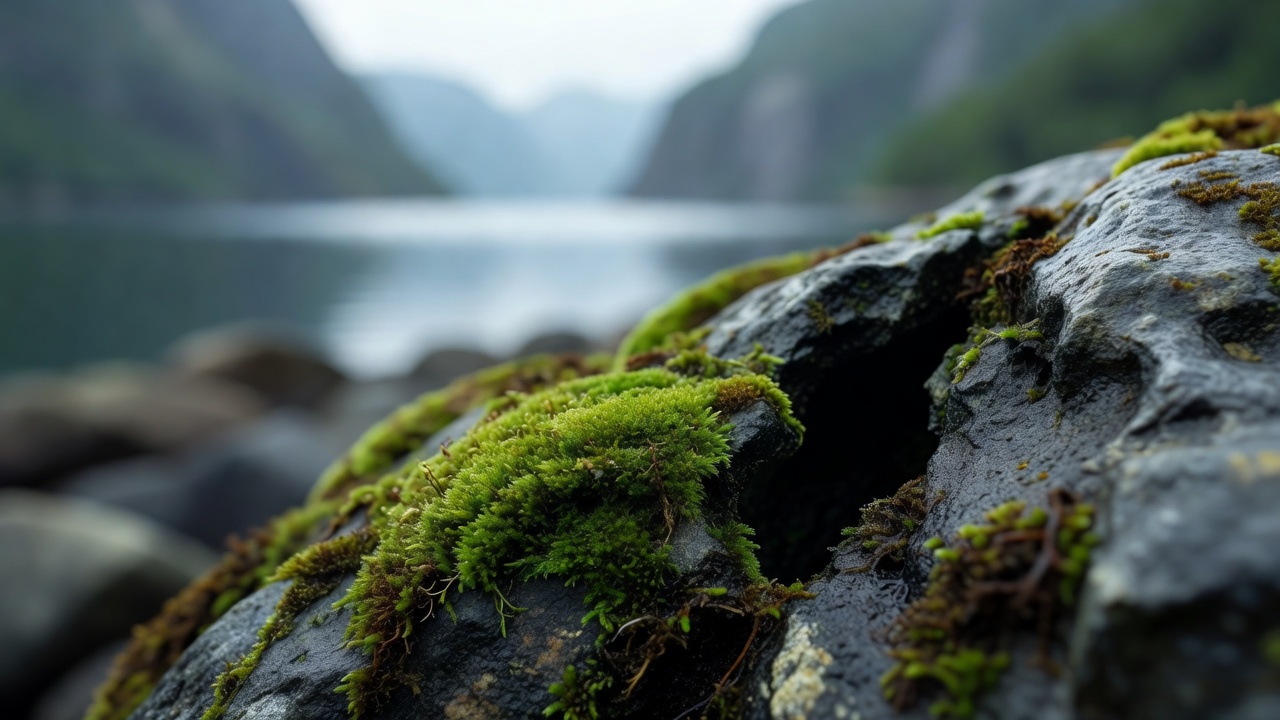
The huldra is not one fixed character
In Norwegian folk tradition, the huldra is commonly associated with the forest and outlying landscapes. Accounts vary in appearance, behaviour and relationship with people. The often-mentioned animal tail is one recognisable motif, but reducing the tradition to a single costume or personality obscures that variation. A reference work is a useful beginning; a regional collection can provide a more specific account.
For a photographer, the practical lesson is restraint. You can use a half-seen path or a sudden shift in light to explore the experience of uncertainty without claiming to illustrate an actual encounter. If a portrait or staged scene is inspired by folklore, label it as staged. Do not imply that a contemporary resident represents a supernatural figure without their informed agreement.
Water stories ask for careful boundaries
The nøkk belongs to Scandinavian traditions of dangerous or uncanny water beings, with names and characteristics that differ across languages and sources. Such narratives can be read alongside the real hazards of deep water, but that does not establish a single origin or purpose for every version. Avoid explaining a tradition away with a neat theory unless a reliable source supports the argument.
Nor should a story about inland water automatically become a story about a specific fjord. The photograph may invite a thematic pairing, but thematic resemblance is not geographical evidence. Write “this image prompted a reading about water beings” rather than “the being lives here” unless you can identify a recorded local account—and even then, identify it as folklore.
The trees conceal more than the frame can explain.
Original journal interpretation; not a quotation from a collected folktale
Collected tales have their own history
Peter Christen Asbjørnsen and Jørgen Moe are central names in the collection and publication of Norwegian folktales in the nineteenth century. Their work offers an important route into narrative traditions, but a printed collection is not an unfiltered recording of every community. Selection, editing, literary form and later translation all affect what reaches a reader.
When citing a tale, record the title, collection, edition and translator when relevant. Distinguish a literary folktale from a place-specific legend, and a modern retelling from an older printed version. A short web summary may be useful for orientation, yet it should not replace the source when you quote wording or make a detailed claim. Contemporary translations and photographs may also remain protected by copyright.
Listen without turning people into exhibits
A conversation in Undredal or another coastal settlement may reveal a remembered place-name, a family anecdote or a version of a familiar story. Ask whether the speaker is comfortable being quoted and whether they want their name included. Note the date and setting, and preserve the difference between their recollection and your interpretation. Do not describe one person's account as the belief of an entire village.
Norwegian, Swedish, Danish and Sámi traditions should not be blended into a generic “Nordic mythology” for visual convenience. These are distinct, internally varied cultural contexts. This journal's introductory examples focus mainly on Norwegian material; they do not represent all Scandinavian or Indigenous storytelling. Where a story belongs to a community with its own protocols, follow those protocols and seek appropriate sources.
Build a caption that leaves room for doubt
A useful caption can proceed in three steps: name the photographed place, identify the tradition being discussed, and state what the picture contributes. For example, a forest-edge image might be paired with a sourced discussion of huldra traditions, followed by a sentence explaining that the photograph is a contemporary interpretation rather than a record of a local event.
You do not have to fill every silence. Sometimes an accurate location, a clear source note and a modest observation create more atmosphere than a confident invented legend. The aim is not to remove enchantment from the landscape. It is to let curiosity remain generous, accountable and open to correction.